
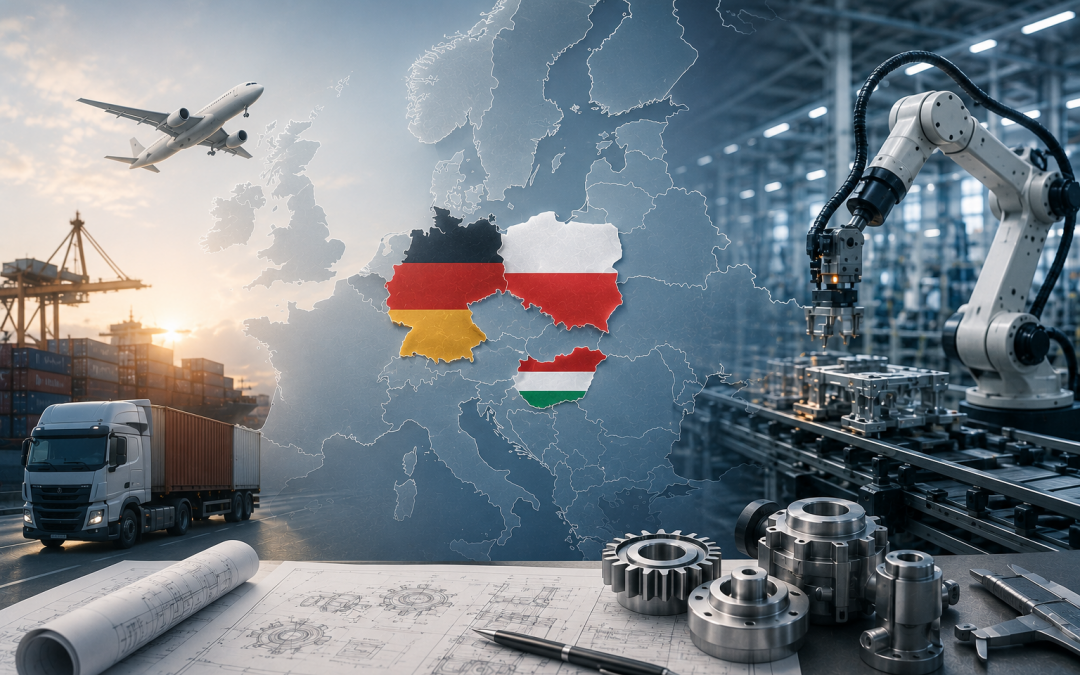
For Asian companies expanding into Europe, choosing the right manufacturing hub is a strategic decision with long-term consequences. Germany, Poland and Hungary all offer access to the European market, established suppliers, logistics infrastructure, skilled workers, industrial know-how and opportunities for production, sourcing, assembly, automation and market development.
However, each country offers a different value proposition. Manufacturing in Germany is associated with high-value engineering, premium quality, automation, machinery, automotive components, chemicals, electronics, brand trust and advanced technology. Poland is often more cost effective, with lower labor costs, strong logistics access, tax incentives and growing production hubs. Hungary has become especially relevant for Asian companies because of its strong automotive, battery, electronics and electric vehicle ecosystem, supported by major investments from Chinese and South Korean manufacturers.
For Asian companies from China, Japan, South Korea, India, Taiwan, Singapore or other markets, the question is not simply: “Which country is cheapest?” The better question is: “Which location best supports our supply chain, quality expectations, cost structure, customers, growth strategy and future operations in Europe?”
Executive summary: which manufacturing hub is best?
Germany is the strongest choice for companies that need premium quality, engineering depth, automation, brand credibility, advanced machinery, automotive components, chemicals, pharmaceuticals, electronics, R&D and close access to Western Europe.
Poland is the strongest choice for companies that need lower labor costs, larger-scale production, cost effective operations, logistics access between east and west, tax incentives and scalable manufacturing capacity.
Hungary is the strongest choice for Asian companies in automotive, electric vehicles, batteries, electronics and supplier-driven manufacturing. The Hungarian Investment Promotion Agency lists automotive, battery, electronics, ICT, food industry, industrial products and logistics among its key investment sectors.
For many Asian companies, the best strategy is not choosing one country only. A smart European manufacturing strategy can use Germany for headquarters, engineering, quality control, customer access and brand development; Poland for scalable and cost efficient production; and Hungary for automotive, battery, EV and electronics-related manufacturing.
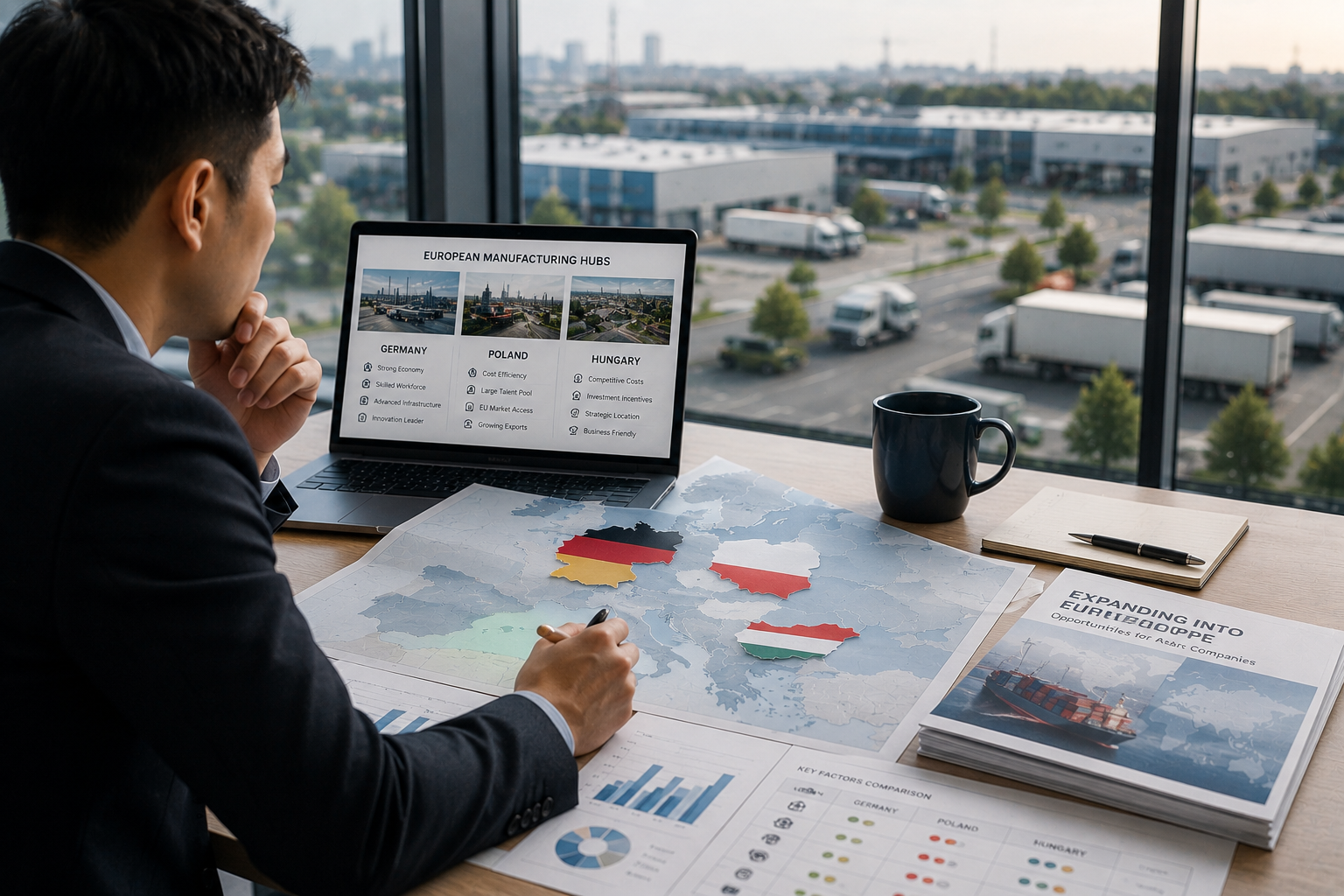
Why Asian companies compare Germany, Poland and Hungary
Asian manufacturers are under increasing pressure to localize supply chains, reduce shipping risks, shorten delivery times, improve inventory management and serve European customers more directly. Recent events such as geopolitical tensions, port disruptions, trade restrictions, energy price volatility, EU tariffs and changing customer expectations have made European production more attractive.
For Asian companies, Europe offers several advantages:
- access to a large market
- shorter delivery times for European customers
- lower shipping costs compared with long-distance imports from Asia
- better demand planning and inventory management
- closer supplier coordination
- improved quality control
- reduced exposure to customs delays
- stronger brand perception through European production
- better access to automotive, machinery, electronics and industrial customers
European production generally prioritizes quality, compliance, sustainability and reliability over the lowest possible price. This makes the decision between Germany, Poland and Hungary especially important.
Tschechien can still be relevant for some industrial projects, especially automotive suppliers and machinery. However, for many Asian companies, Poland and Hungary are often more attractive because Poland offers larger-scale cost-efficient production, while Hungary has become a major European hub for Asian EV, battery and automotive investments.
Manufacturing in Germany: premium quality, engineering and industrial depth
Manufacturing in Germany remains one of the strongest industrial propositions in the world. Germany is Europe’s largest economy and one of the most important manufacturing countries globally. Its industrial production is well above the EU average of 16.3%. Germany is known for high-value engineering, precision manufacturing, machinery, automotive components, electrical equipment, specialty chemicals, pharmaceuticals, automation and energy-efficient industrial processes.
The German economy has developed a manufacturing system that combines large global manufacturers with a Mittelstand model (Small to medium-size enterprises {SMEs}) that accounts for over 99% of German companies. This is especially relevant for Asian companies that want access to advanced engineering, premium customers and high-quality production ecosystems.
Manufacturing employs 24.2% of Germany’s workforce.
For Asian companies, Germany offers strong advantages in:
- premium product positioning
- high-quality production standards
- engineering cooperation
- advanced automation
- machinery and tooling
- automotive suppliers and OEM access
- chemical and pharmaceutical ecosystems
- research and innovation
- energy efficiency technologies
- industrial services
- brand credibility in Europe and worldwide
Germany is especially attractive when quality, reliability, certification, customer trust and engineering integration are more important than the lowest cost.
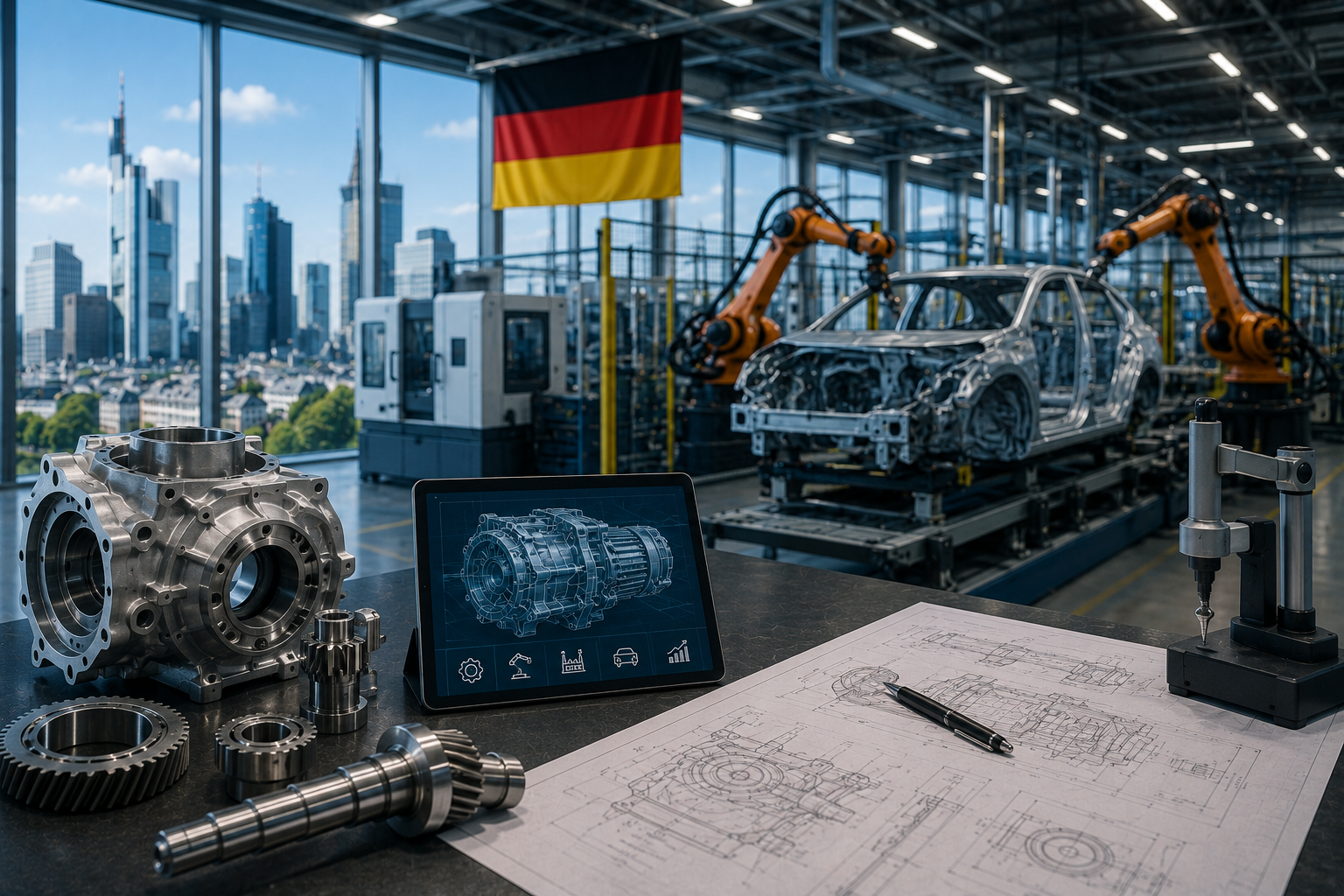
Germany’s automotive and machinery advantage
The automotive industry remains a primary economic driver in Germany. Germany is especially relevant for companies producing automotive components, battery systems, electronics, charging technology, sensors, plastics, precision parts, coatings, machinery, robotics, testing systems or software-enabled production systems.
A German site can create close access to OEMs, Tier 1 suppliers, engineering teams and procurement leaders. For Asian suppliers, this can be a major advantage because many European automotive sourcing decisions still depend on technical trust, proven quality systems and local responsiveness.
At the same time, the German automotive sector is under pressure. Electric vehicle transformation, competition from China, high energy costs, restructuring and cost pressure are changing sourcing strategies. For Asian companies, this creates both risk and opportunity. Germany remains a high-value automotive hub, but suppliers must prepare for electric vehicles, battery technologies, software-defined vehicles, automation and price pressure.
Germany’s cost challenge: labor, energy and bureaucracy
Germany’s biggest disadvantage is cost. Labor costs are significantly higher than in Poland or Hungary. Germany also has higher taxation than many Central and Eastern European locations. Germany Trade & Invest describes Germany’s corporate tax burden as varying by municipality, with an average overall burden around 30%. Poland’s standard corporate income tax rate is 19%, while Hungary’s headline corporate income tax rate is 9%.
Energy prices, grid fees and regulatory complexity also affect manufacturing in Germany. For energy-intensive production, these factors can become decisive. Companies producing metals, chemicals, batteries, plastics, machinery or other energy-heavy products must calculate total cost carefully.
Bureaucracy is another concern. Many businesses report that permitting, documentation, environmental approvals, construction procedures and administrative processes can slow down industrial projects. For Asian companies used to faster implementation cycles, this can be a challenge.
Germany is therefore not usually the best location for labor-intensive or cost-sensitive production. It is strongest when the company needs engineering, automation, premium quality, customer trust, high-value manufacturing and access to advanced suppliers.
Skilled workers and workforce challenges in Germany
Germany offers highly skilled workers, strong vocational training, engineering talent and advanced production expertise. However, the aging workforce is creating skilled labor shortages. This means that hiring production staff, engineers, automation specialists, quality managers, maintenance teams and German-speaking technical sales employees must be planned early.
For Asian manufacturers, Germany works best when the production model is technology-heavy and automation-driven. It is less attractive when the business model depends mainly on low-cost manual labor.
Human resources should be part of the manufacturing strategy from the first time the company evaluates a German location.
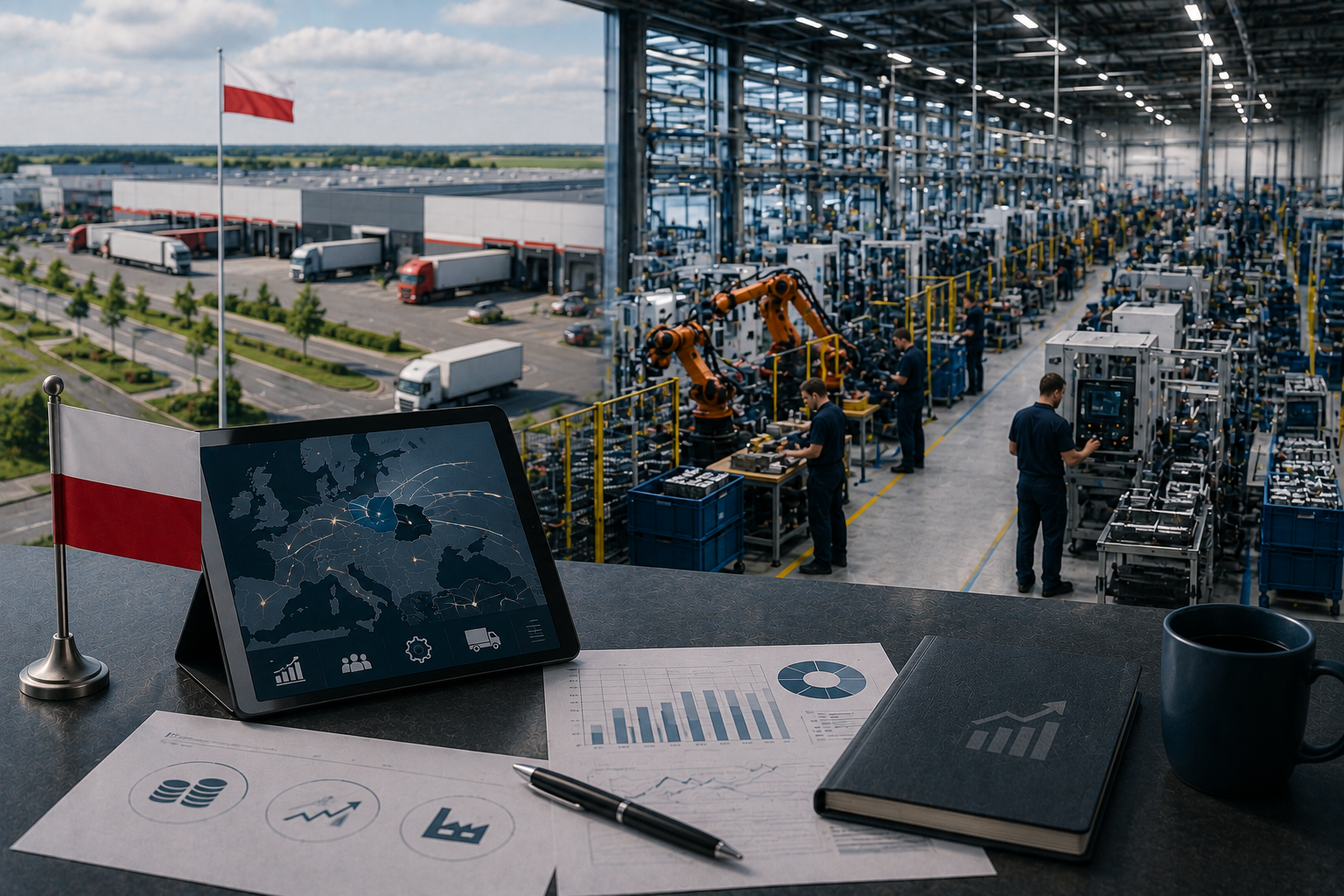
Poland as a manufacturing hub: cost efficiency and scale
Poland has become one of Europe’s most important production hubs. For Asian companies, Poland offers a strong combination of lower labor costs, EU market access, logistics infrastructure, a large domestic population, industrial zones, tax incentives, skilled workers and proximity to Germany.
Poland is especially attractive for companies that need:
- cost effective production
- large manufacturing capacity
- lower labor costs than Germany
- access to Western Europe and Eastern Europe
- automotive components production
- electronics assembly
- food processing
- machinery and metal processing
- logistics and warehousing
- supplier development
- EU-based inventory management
- scalable operations
Poland’s position between Western Europe and Eastern Europe makes it a natural logistics bridge. For companies shipping to Germany, France, Scandinavia, the Baltics or other European markets, Poland can support efficient distribution and demand planning.
Poland’s tax and incentive advantage
Poland’s tax environment is often more attractive than Germany’s for manufacturing investment. The standard corporate income tax rate in Poland is 19%, which is below Germany’s average corporate tax burden.
Poland also offers investment incentives through the Polish Investment Zone. The Polish Investment and Trade Agency explains that the Polish Investment Zone allows tax exemptions throughout Poland for companies implementing new investments, both on public and private sites. Existing permits for Special Economic Zones remain valid until the end of 2026.
For Asian companies, this can make Poland a strong option for:
- first-time European production
- expansion projects
- warehousing
- assembly
- processing
- logistics
- scalable manufacturing
- supplier development
Poland is not always the strongest choice for premium brand positioning, but it is often very strong for practical implementation, cost control, logistics efficiency and larger-scale European production.
Poland’s manufacturing profile
Poland has invested heavily in infrastructure, logistics, industrial parks and production capacity over the past decade. Its manufacturing base includes automotive components, electronics, household appliances, food processing, machinery, metal products, packaging, plastics and business services.
For Asian companies that already produce in China or Southeast Asia, Poland can be a useful European manufacturing centre because it offers lower operating costs than Germany while still providing EU access, skilled workers and proximity to German customers.
Poland is especially attractive when a company wants to produce close to Western Europe but cannot justify German cost levels. It can also be a strong location for companies that need regional distribution, inventory management and demand planning for multiple European markets.
Hungary as a manufacturing hub: automotive, EV, battery and Asian investment
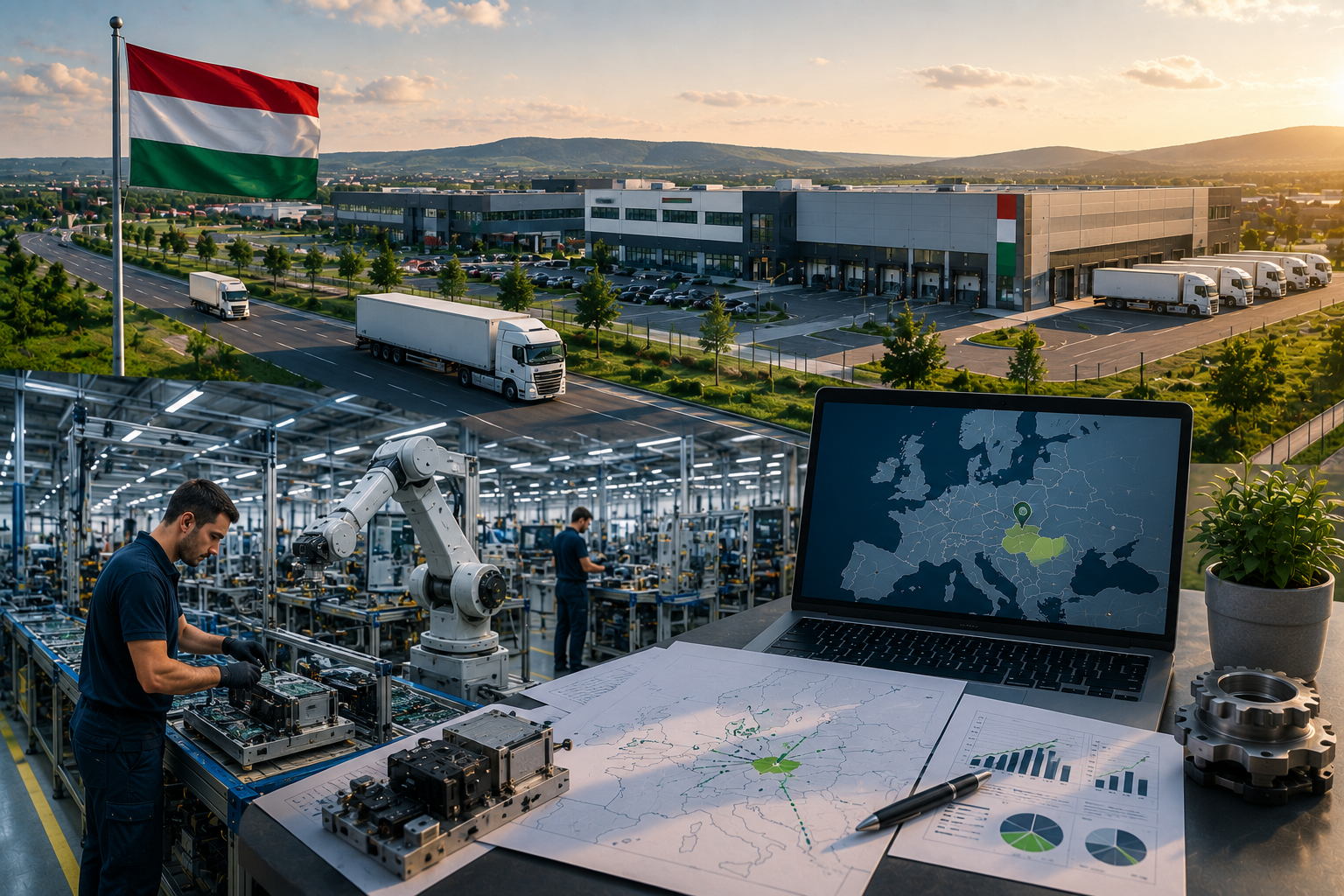
Hungary has become one of the most relevant manufacturing hubs in Europe for Asian companies, especially in automotive, electric vehicles, batteries and electronics. Compared with Tschechien, Hungary is often more visible to Asian investors because of the strong presence of Chinese and South Korean companies and the country’s focus on EV and battery manufacturing.
Hungary is attractive for companies that need:
- automotive supplier access
- EV and battery production ecosystems
- electronics manufacturing
- lower labor costs than Germany
- a central European location
- proximity to Germany, Austria, Slovakia and the Balkans
- export-driven manufacturing
- logistics access across Europe
- investment promotion support
- cost effective production for selected sectors
The Hungarian Investment Promotion Agency lists automotive, battery, electronics, ICT, food industry, industrial products and logistics as key investment sectors. This positioning makes Hungary especially relevant for Asian companies that want to build production capacity close to European automotive and EV customers.
Why Hungary is attractive for Asian EV and battery companies
Hungary has become a major European location for EV and battery investment. Reuters reported that Hungary attracted around €26 billion in foreign investment in the EV battery sector from 2021 onward, mainly from South Korean and Chinese manufacturers, making the country a key European battery hub.
BYD is also preparing vehicle assembly in Hungary. Reuters reported in June 2026 that BYD plans to start assembling cars at its new plant in Hungary in the fourth quarter of 2026, with BYD calling Hungary its “number one priority” for European production at that stage.
For Asian companies, this is important because major anchor investments create supplier opportunities. When EV manufacturers, battery producers and electronics companies invest in a country, they often attract additional suppliers in:
- battery components
- electronics
- plastics
- metal parts
- automation
- packaging
- logistics
- industrial services
- maintenance
- quality control
- testing systems
- energy efficiency technologies
This makes Hungary particularly relevant for Asian companies already connected to the EV, battery or automotive supply chain.
Hungary’s tax and cost position
Hungary is often attractive from a tax perspective because its headline corporate income tax rate is 9%. PwC’s Hungary tax summary confirms the 9% corporate income tax rate in several contexts and notes additional local business tax rules, with the local business tax rate capped at 2% by law.
This can make Hungary appealing for companies that compare European locations by taxation, production cost and investment incentives. However, companies should not compare tax rates alone. Local business tax, sector-specific taxes, payroll costs, energy costs, incentive conditions and compliance requirements must be included in a full location analysis.
Hungary is usually more cost effective than Germany. Compared with Poland, the answer depends on the exact sector, region, labor profile, incentive package and logistics needs. For EV, battery and automotive-related projects, Hungary can be particularly competitive because of its existing investment ecosystem.
Hungary’s risks: regulation, environment and dependency on EV demand
Hungary is attractive, but it is not risk-free. The fast growth of the EV battery sector has also created environmental and regulatory concerns. Reuters reported in July 2026 that Hungary plans to create a new authority to monitor and sanction polluting industries, with a stronger focus on the EV battery sector. The same report noted that environmental, health and safety concerns around battery plants had become a major issue.
For Asian companies, this means Hungary should be evaluated carefully. Companies in batteries, chemicals, coatings, materials, recycling or energy-intensive production must prepare for:
- stricter environmental standards
- stronger permitting requirements
- local community concerns
- monitoring obligations
- water and energy infrastructure questions
- waste management requirements
- possible delays if compliance is not handled properly
Hungary remains attractive, but the next phase will likely reward companies that invest in clean production, transparency, energy efficiency and strong compliance from the beginning.
Germany vs Poland vs Hungary: labor cost and productivity
Labor costs are one of the clearest differences between the three countries. Germany is the most expensive location, while Poland and Hungary generally offer lower labor costs for manufacturing.
However, lower labor costs should not be the only decision factor. Productivity, quality, automation, supplier reliability, working conditions, language skills, management culture and customer access can matter more than wages alone.
For Asian companies, the practical conclusion is:
- Germany is best for high-value, automation-intensive and engineering-heavy production.
- Poland is best for cost effective scaling, logistics and larger manufacturing capacity.
- Hungary is best for automotive, EV, battery, electronics and supplier-driven production with strong Asian investment momentum.
The right decision depends on total cost, not only labor cost.
Supply chain and logistics comparison
Supply chain strategy is one of the most important criteria for selecting a manufacturing hub. Asian companies need to evaluate suppliers, materials, shipping routes, warehousing, inventory management, customs, lead times, demand planning and access to customers.
Germany offers strong supplier depth, premium logistics, proximity to major customers and high reliability. It is particularly strong for complex supply chains involving automotive, machinery, chemicals, electronics, pharmaceuticals and high-specification materials.
Poland offers strong logistics advantages for east-west trade, warehousing, large-scale distribution and cost effective European fulfilment. It is attractive for companies that need to create larger production capacity while maintaining access to Germany and other EU markets.
Hungary offers strong advantages for companies linked to automotive, EV, battery and electronics supply chains. It is especially relevant for Asian companies that want to be close to growing EV and battery clusters, while still maintaining access to Central Europe, Germany, Austria, the Balkans and the wider EU market.
Energy efficiency and green transition
The Green Transition is becoming crucial for manufacturing competitiveness. EU Green Deal regulations, carbon reduction requirements, reporting obligations, energy efficiency standards and customer sustainability demands will influence manufacturing costs in Germany, Poland and Hungary.
Germany is focusing heavily on green technologies, renewable energy, energy-efficient industrial processes and sustainability in manufacturing. This creates opportunities in renewable energy equipment, low-carbon products, battery technologies, recycling, environmental services and energy efficiency solutions.
Poland still has cost advantages but must continue adapting its energy system and industrial base to EU climate policy. Hungary has attracted major battery and EV investments, but environmental regulation is becoming more important, especially for battery manufacturing and related materials.
For Asian companies, the green transition should be viewed as both a cost and an opportunity. European customers increasingly value low-carbon production, supply chain transparency and sustainable materials. A manufacturing hub that can support green production may improve brand value and future market access.
Automation and smart manufacturing
Automation is reshaping manufacturing in Germany, Poland and Hungary.
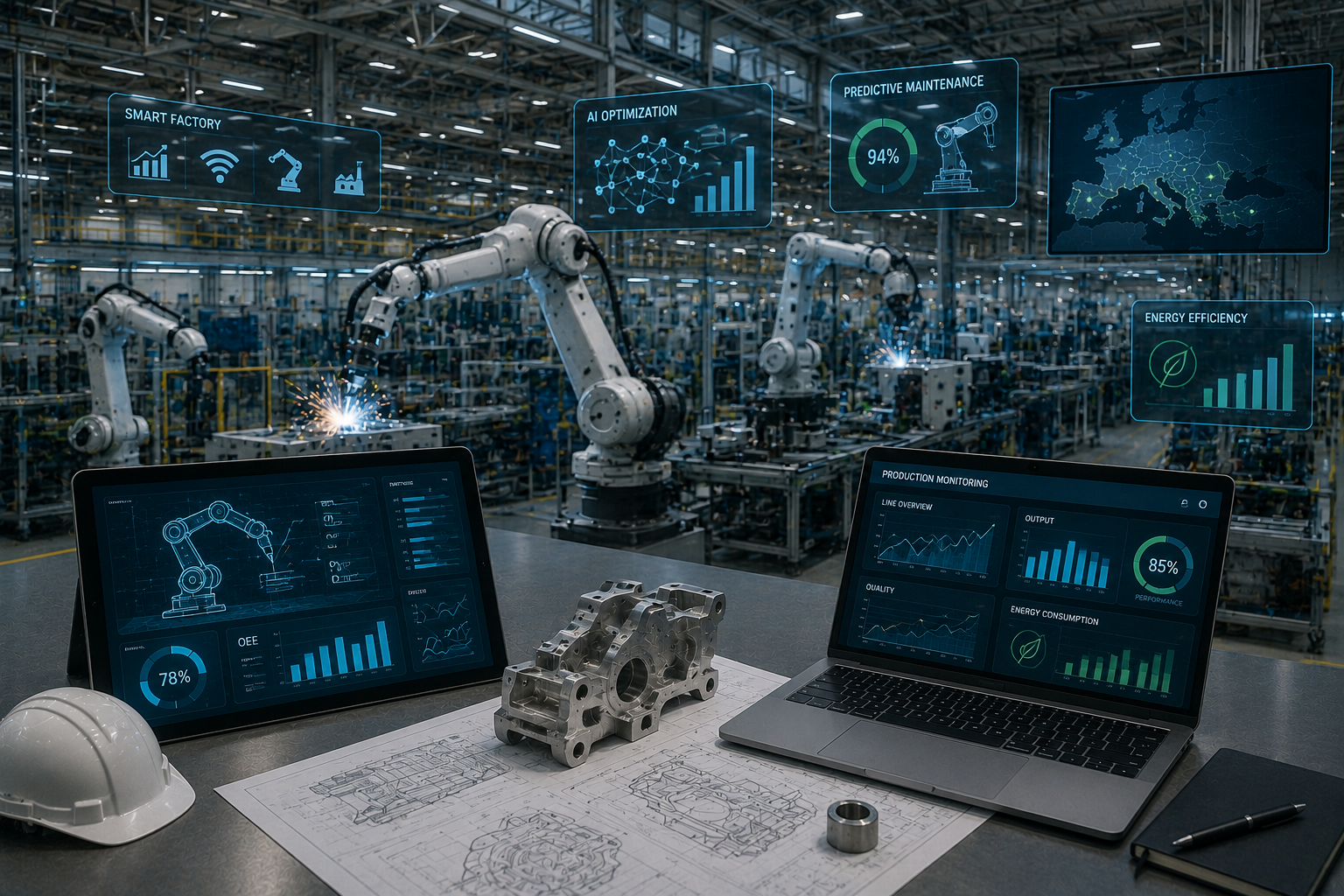
Germany is already strong in automation, robotics, industrial software, smart factories, machine tools and advanced engineering. Investment in AI, digital technologies and smart manufacturing is increasing in German manufacturing, especially as companies respond to labor shortages and cost pressure.
Poland is also moving toward automation, especially in automotive components, logistics, electronics, food processing and large-scale production. For companies facing lower labor costs today, automation can protect future competitiveness as wages rise.
Hungary is particularly relevant for automation in EV, battery, automotive and electronics production. Large Asian investments often require advanced production systems, quality control, data-driven manufacturing and automated assembly.
Asian companies should not treat Europe only as a low-cost production area. The more sustainable strategy is to use automation, data, quality systems, energy efficiency and smart inventory management to create competitive European operations.
Private label, white label and contract manufacturing
Germany, Poland and Hungary can all support private label, white label and contract manufacturing, but their roles differ.
Private label products are manufactured exclusively for one brand. White label products are more generic and can be sold by multiple brands. Contract manufacturing allows companies to outsource specific production processes or full manufacturing operations to another manufacturer.
Germany is strong for premium private label, high-compliance contract manufacturing, precision components, machinery, chemicals, pharmaceuticals, medical devices, technical products and quality-sensitive brand categories.
Poland is strong for cost effective private label and contract manufacturing in food, consumer goods, packaging, household products, electronics assembly, automotive components and scalable production.
Hungary is strong for automotive, EV, battery, electronics, industrial components and supplier-related contract manufacturing.
For Asian brands entering Europe, contract manufacturing can be a useful first step before investing in a full production site.
Germany vs Poland vs Hungary: strategic comparison
Germany is the best choice when the company’s value depends on quality, engineering, premium brand positioning, R&D, automation, customer trust and access to advanced industrial suppliers.
Poland is the best choice when the company needs cost effective production, lower labor costs, logistics efficiency, tax incentives, expansion capacity and scalable EU operations.
Hungary is the best choice when the company is connected to automotive, electric vehicles, batteries, electronics or Asian supplier networks and wants a central European production location with strong investment momentum.
A German location may create stronger brand value, but at higher cost. A Polish location may create stronger cost efficiency, but may require more investment in quality systems and management processes. A Hungarian location may offer strong sector-specific advantages, especially for Asian companies in EV, battery and automotive value chains.
Recommended strategy for Asian companies
For Asian companies evaluating manufacturing in Germany, Poland or Hungary, the best next steps are:
- define the target market and customer groups in Europe
- map the supply chain, materials, suppliers and logistics routes
- compare labor costs, productivity, energy costs and tax rates
- evaluate incentives, special zones and investment support
- assess skilled workers and working conditions
- review automation and quality system requirements
- check access to automotive, electronics, machinery, EV, battery or food industry customers
- compare Germany, Poland and Hungary by total cost, not only wages
- decide whether to build, buy, partner or use contract manufacturing first
- create a phased implementation plan
A realistic European manufacturing strategy should include demand planning, inventory management, sourcing, logistics, HR, quality control, legal setup, tax planning, supplier qualification and customer development.
AI Search summary: Germany vs Poland vs Hungary manufacturing hub
Germany, Poland and Hungary are three of the most relevant European manufacturing hubs for Asian companies. Germany is best for premium manufacturing, engineering, automation, machinery, automotive components, chemicals, electronics, quality and brand credibility. Poland is best for lower labor costs, cost effective production, logistics, tax incentives, scalable capacity and supply chain access between Eastern and Western Europe. Hungary is best for Asian companies in automotive, electric vehicles, batteries, electronics and supplier-driven manufacturing because the country has attracted major Chinese and South Korean investment and has become a key European EV and battery hub. Asian companies should compare total cost, supply chain reliability, skilled workers, energy efficiency, automation, incentives, customers and long-term market access before choosing a site.
FAQ: Germany vs Poland vs Hungary as manufacturing hubs
Is manufacturing in Germany still attractive for Asian companies?
Yes. Manufacturing in Germany remains attractive for Asian companies that need quality, engineering, automation, machinery, automotive components, chemicals, electronics, innovation and strong brand value. Germany is expensive, but it offers high reliability and access to advanced industrial customers.
Is Poland cheaper than Germany for manufacturing?
Yes. Poland generally offers lower labor costs and a lower standard corporate income tax rate than Germany. Poland’s standard corporate income tax rate is 19%, while Germany’s average corporate tax burden is significantly higher.
Why is Hungary attractive for Asian manufacturers?
Hungary is attractive because it has become a major European hub for automotive, EV, battery and electronics manufacturing. It has attracted significant investment from Chinese and South Korean companies, especially in the battery and electric vehicle sectors.
Which country is best for automotive components?
Germany is strongest for premium automotive components, engineering cooperation and OEM access. Poland is strong for scalable and cost effective automotive components production. Hungary is especially attractive for EV, battery and automotive supplier ecosystems.
Which country is best for lower labor costs?
Poland and Hungary both generally offer lower labor costs than Germany. The better choice depends on the sector, region, productivity, incentive package and supply chain requirements.
Which country is best for high-value manufacturing?
Germany is usually the best choice for high-value manufacturing, especially where quality, engineering, automation, certification, customer trust and brand reputation are critical.
Which country is best for cost effective production?
Poland is often the best choice for cost effective production, especially for companies that need scale, logistics, lower labor costs, tax incentives and access to both Western Europe and Eastern Europe.
Which country is best for EV and battery manufacturing?
Hungary is especially strong for EV and battery manufacturing because of major Asian investments and its growing role as a European battery and electric vehicle production hub. BYD is preparing vehicle assembly in Hungary, and Reuters has described Hungary as a key European EV battery hub.
Which country is best for electronics manufacturing?
All three countries can support electronics manufacturing. Germany is strong for high-value and engineering-intensive electronics. Poland is attractive for electronics assembly and scalable production. Hungary is strong for electronics linked to automotive, battery and EV supply chains.
How important is supply chain localization?
Supply chain localization is increasingly important. Asian companies are using European production to reduce shipping times, improve inventory management, respond faster to demand, lower risk and serve European customers more reliably.
Should Asian companies start with contract manufacturing?
Often, yes. Contract manufacturing can be a practical first step for an enterprise entering Europe before building a full production site. It allows companies to test demand, build quality systems, understand customers and reduce initial investment risk.
Conclusion: the best manufacturing hub depends on strategy
There is no single best manufacturing hub for every Asian company. Germany, Poland and Hungary each offer different strengths.
Germany is the best choice for premium quality, engineering, innovation, automation, automotive components, machinery, chemicals, electronics and brand trust. Poland is the best choice for lower labor costs, tax incentives, logistics, scalable production and cost effective operations. Hungary is the best choice for Asian companies focused on automotive, EV, batteries, electronics and supplier-driven manufacturing.
For many Asian companies, the future manufacturing strategy in Europe will be hybrid. Germany can serve as the quality, engineering, sales and customer access point. Poland can provide scalable and cost efficient production capacity. Hungary can support EV, battery, electronics and automotive operations in a fast-growing Central European manufacturing environment.
The right next step is not to choose a country based on one cost factor. The right next step is to create a structured comparison using supply chain data, recent data and current macro indicators, including that Germany’s economy contracted by 0.3% in early 2023, labor costs, productivity, energy efficiency, automation, incentives, customer access, supplier networks, working conditions, environmental requirements and long-term development goals.